Projects
Converting Open Cycle to Combined Cycle | Lessons from S&K Phase-II
Converting open-cycle gas-engine stations to combined cycle: the owner's engineer role on the US$55M S&K Phase-II EPC at K-Electric — HMBD and P&ID design reviews, tie-ins to a running station, Primavera P6 schedule discipline, and defending steam blows and chemistry in commissioning.
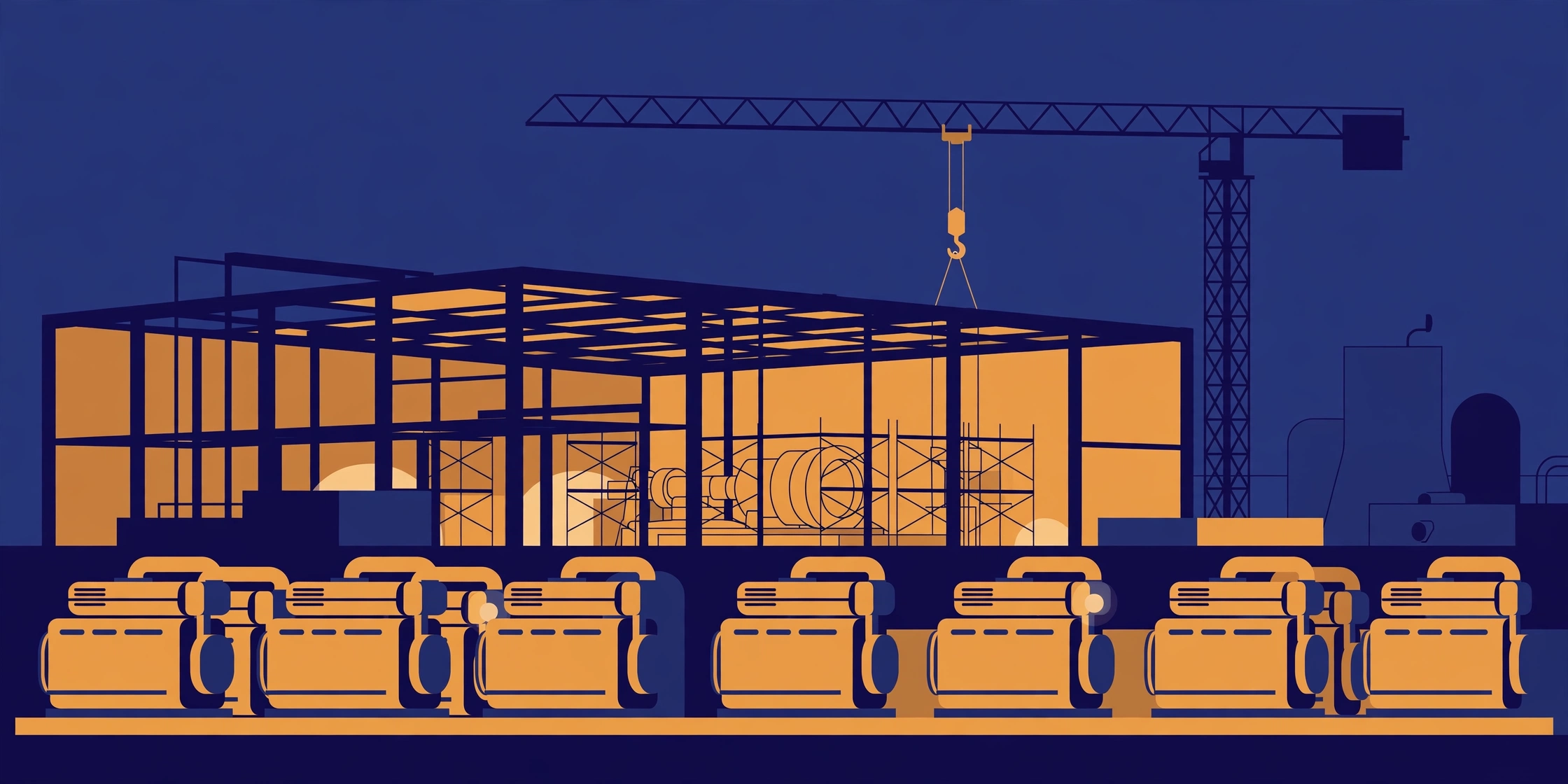
A combined cycle plant is a second chance at the same fuel. In open cycle operation, a gas engine turns about two-fifths of the fuel's energy into electricity and sends the rest up the exhaust stack as heat. A combined cycle conversion refuses to let that heat go: it catches the exhaust, makes steam from it, and runs a second set of turbines on steam the plant burned nothing to produce. The fuel bill does not change; the electricity does.
I learned this from the owner's side of the table. During my first tenure at K-Electric, I was the owner's lead mechanical engineer on the S&K Phase-II project — a US$55M EPC conversion that put a waste-heat recovery steam generator onto the exhaust of every engine at the two gas-engine stations — 32 WHRSGs of 1.625 tph each at each station, 52 tph of steam in all — and added one 10 MW steam turbine at each station. The EPC contractor designed and built it. My job was to make sure the plant could live with what got built for the next twenty years. The distinction between a project that is built and a project that can be operated is what this post is about.
The Business Case Is the Exhaust Stack
Open-cycle gas engines are reliable and flexible, but they're fuel-hungry: every megawatt-hour carries the full cost of the gas that went in. The exhaust leaving them at several hundred degrees is not waste in any meaningful sense — it is uncollected product. Put a heat recovery boiler in its path and a steam turbine behind that, and you generate power from fuel you have already paid for. Every fleet and every exhaust temperature differs, so the honest answer lives in the heat and mass balance — exactly where an owner's engineer starts. If you want a feel for the arithmetic, my site's heat-rate calculator lets you work through the numbers on any plant configuration. The direction is beyond argument: a conversion is one of the few projects where the fuel line on the budget does not move while the output line does.
What an Owner's Engineer Actually Does
An EPC contract buys you a contractor who will deliver what the contract says. It doesn't buy you someone whose interests line up with twenty years of operations — the contractor leaves when the project ends. The owner's engineer is there for the people who stay — the operators, the maintenance crews, the chemistry lab, the people who will answer for this equipment in year twelve.
In practice, that meant design reviews: the heat and mass balance diagrams (HMBDs) and the piping and instrumentation diagrams (P&IDs), sheet by sheet, system by system. The contractor knows steam cycles in general. We knew *our* station — its water chemistry, its cooling capacity, its operating habits, the quirks of engines that had been running there for years.
The HMBD review tests the project's thermodynamic promise against the site's reality — exhaust temperatures, ambient conditions, and fuel. A balance built on nameplate exhaust temperatures is a story; a balance built on measured ones is a design. The gap between the two, multiplied across two stations over twenty years, is the entire project economics.
The P&ID review decides operability: drains, vents, bypasses, sampling points, maintenance access, the routes the pipes actually take through a congested station. Thirty-two WHRSGs at a station is not one boiler — it is a distributed steam system woven into a running power station, and every one of those units needs to be isolable, drainable, and reachable without dismantling half the pipe rack.
The tie-in review is surgery on a living patient. Every exhaust duct connection, steam line crossing and condensate return touches a station that is generating and earning. Every tie-in gets a plan B written into the sequence before the cranes arrive, not after.
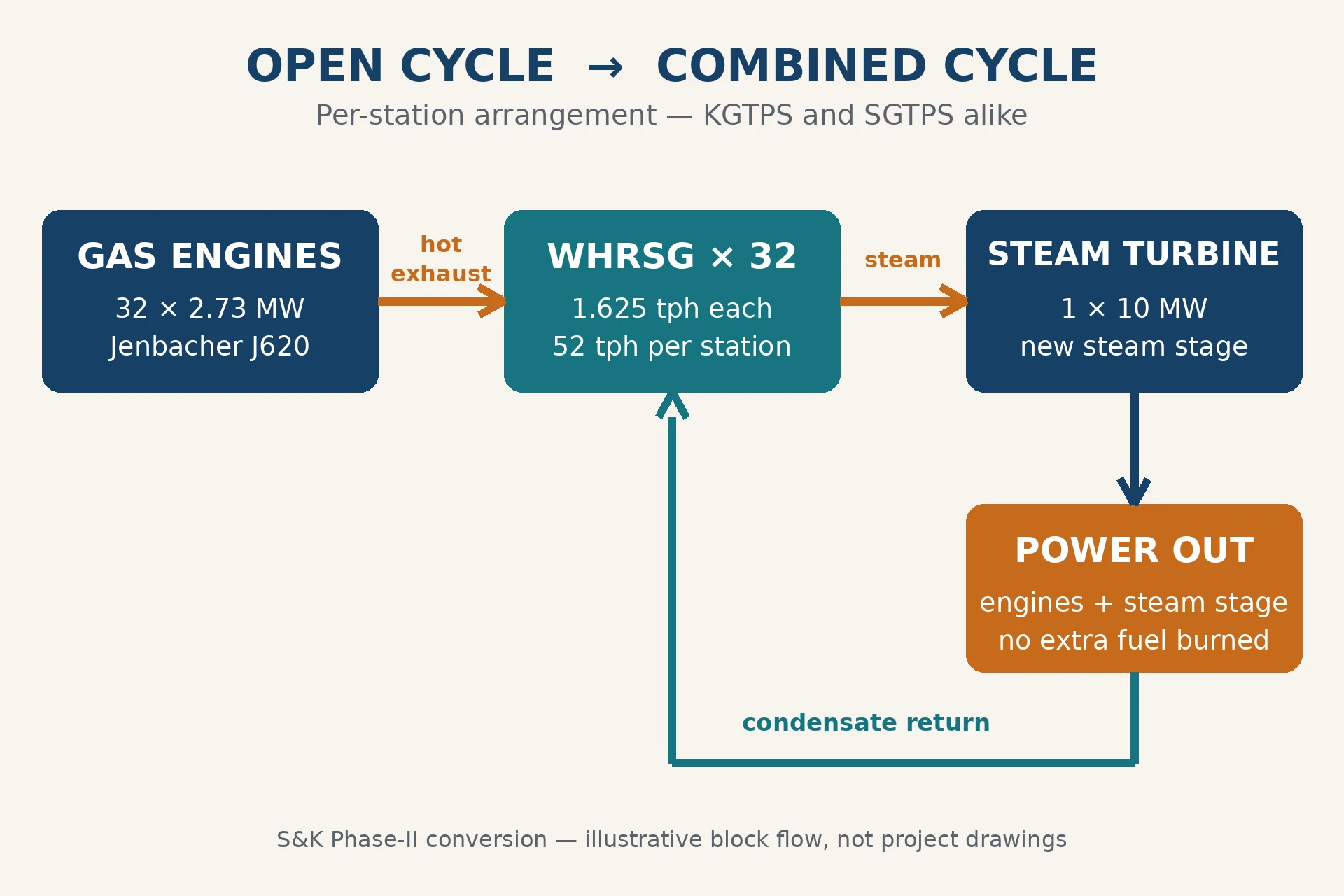
The conversion in one picture: exhaust that used to be waste becomes steam, and steam becomes megawatts. Illustrative diagram, not project drawings.
The Schedule Is an Instrument, Not a Poster
We tracked the project on Primavera P6, and a schedule built with genuine logic links, honest durations and resource loading is the earliest warning instrument a project has. It doesn't tell you where you are; it tells you where you're headed. A two-week slip on a steam-blow preparation sitting on the critical path is not a two-week problem — it is a question about every activity chained behind it, and about the commercial operation date the tariff depends on.
Read the schedule the way you read a pressure gauge: regularly, and with suspicion. Contractors manage to the milestones they're paid on. The owner's engineer manages to the logic — because the logic is what the commissioning sequence, the tie-in outages, and the grid connection all stand on.
Commissioning: Defend the Discipline
The most unforgiving phase of any steam project is pre-commissioning. New steam piping must be chemically cleaned and blown — blasting steam through the lines to scour out mill scale, weld debris and construction contamination before they can reach the turbine's blades. A steam turbine accepts no excuses on steam purity; a few hours of impatient commissioning can buy years of blade damage.
This is where schedule pressure collides with engineering discipline — and exactly why the owner's engineer stands in the line of fire. The steam turbines had to run for decades. Nothing about commissioning would be decided by the calendar. The system was blown properly, the chemistry was proven, and the turbines came onto load onto a steam system the operations team could trust.
The Takeaway
An engineer stepping into an owner's role on a conversion project has one job that matters most: not to build the plant, but to protect the plant that has to live with the build. Review the HMBD against measured reality, not nameplate. Review the P&IDs for the people who will operate the systems, not the people who walk away after commissioning. Read the schedule like an instrument. And in commissioning, defend the discipline — the steam blows, the chemistry, the first synchronisation — against every argument that they can be hurried, because the turbines have a longer memory than the project schedule.
The megawatts promised on paper only materialise if someone represented the next twenty years at the review table.
Further Reading
What a Performance Test Really Proves — How a converted plant's new capacity and heat rate get formally proved, under ASME PTC 46 and PTC 22.
Heat Rate: The Number That Decides a Plant's Tariff — What a conversion does to the one efficiency number the regulator watches.
Plant heat-rate calculator — Work out the efficiency arithmetic on any plant configuration, including before-and-after conversion cases.
Performance testing — pillar guide — The full guide to proving combined cycle performance.
ASME Performance Test Codes — The code owner's page listing the PTC family, including PTC 46, Overall Plant Performance, and PTC 4.4 on HRSGs.
More from the blog
 ProjectsHow Owners Evaluate Bids — Inside a Techno-Commercial EvaluationA bid that passes pre-qualification, a technical read of the method, prices normalised to one basis and a whole-life view may still not be the cheapest — but it will be the one you can defend, to a board, an auditor, and the plant that has to live with it.Read post →
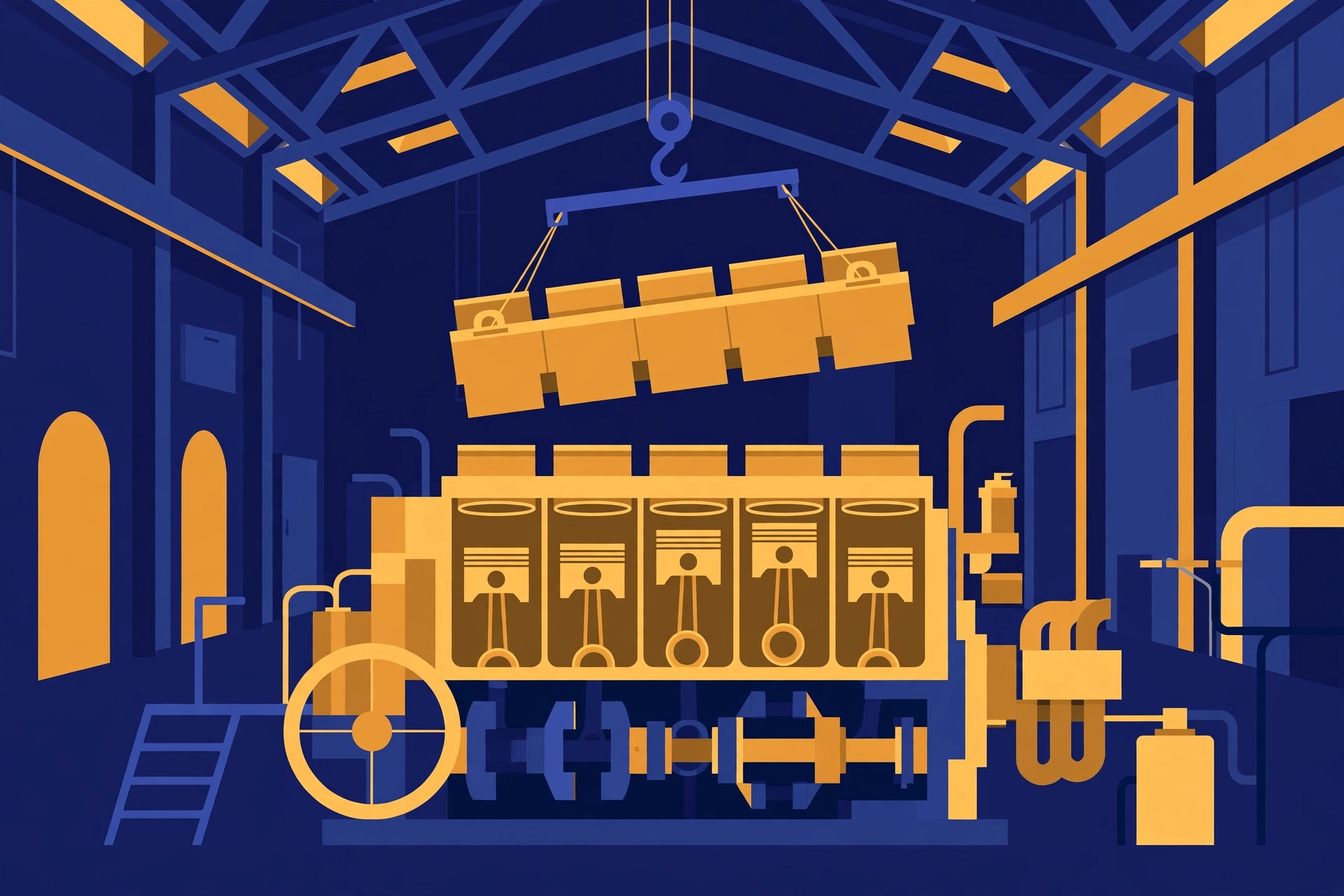 MaintenanceMinor at 30K, Major at 60K — The Rhythm of Engine OverhaulsAn engine wears out on hours, not dates. The 30,000-hour minor is a checkpoint whose measurements shape the 60,000-hour major — and across a 32-engine fleet, sequencing, spares and records are what make the programme work.Read post →
 EnergyWhy the Grid Struggles at 7 pm: Peak Demand, ExplainedThe evening peak is not a shortage of plants. It is a timing problem: demand climbs as solar falls away, and the system must ramp faster than its slowest plant can move — buying the last megawatts from the dear end of the merit order.Read post →